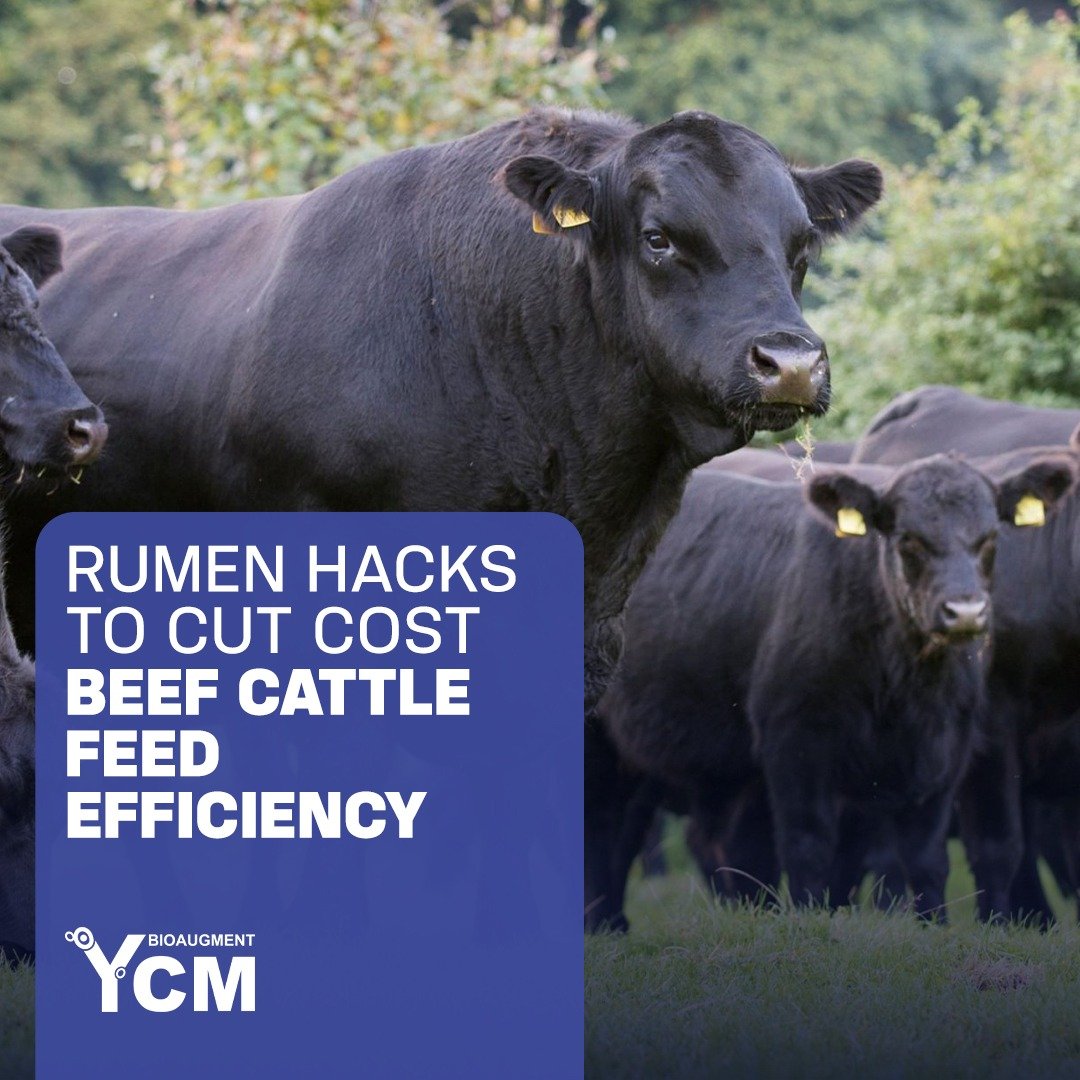
Feed is the largest expense in U.S. beef operations—often accounting for 60–70% of total production costs. That’s why improving beef cattle feed efficiency isn’t just a performance goal; it’s a direct path to lowering overhead and increasing profitability.
From rumen microbiology to ration design, the right strategies can help producers get more gain from every pound of feed. Here are practical, research-backed rumen hacks every American beef producer should implement.
Why Rumen Efficiency Matters
Beef cattle depend on a healthy rumen to:
-
Break down fiber
-
Extract more energy from forages
-
Reduce methane losses
-
Support better average daily gain (ADG)
-
Improve carcass quality
A well-functioning rumen means better feed conversion, lower feed waste, and improved growth rates—even when feed prices are high.
1. Start With High-Quality Forage
Your forage base sets the foundation for all rumen activity.
Tips to improve forage efficiency
-
Harvest at correct maturity
-
Store properly to prevent spoilage
-
Maintain 60–65% moisture in silage
-
Test forage nutrient profiles regularly
Good forage = fewer supplements = lower feed cost.
2. Optimize Fiber Digestion With Postbiotics or YCM Products
Postbiotic metabolites—like YCM—support:
-
Stable rumen fermentation
-
Increased cellulolytic bacterial activity
-
Better NDF digestibility
-
Higher total volatile fatty acid (VFA) production
When fiber digestion increases, beef cattle extract more energy from the same feed, improving feed efficiency naturally.
3. Balance Rations With the Right Protein-to-Energy Ratio
Overfeeding protein or energy wastes money and stresses the rumen.
For cost-effective rumen performance:
-
Use moderate-protein meals rather than high-cost sources
-
Balance starch levels to avoid acidosis
-
Include rumen-degradable and rumen-undegradable protein
A well-balanced ration improves beef cattle feed efficiency by reducing unnecessary nutrient loss.
4. Add Rumen Buffers for Stable pH
Low rumen pH reduces fiber digestion and lowers performance.
To maintain stability:
-
Use sodium bicarbonate or magnesium oxide
-
Avoid sudden changes in starch levels
-
Provide consistent feed delivery times
A stable pH supports microbial growth, which drives better feed conversion.
5. Use Ionophores (Where Allowed)
Monensin and lasalocid are common in beef feedlots and cow-calf operations.
Benefits include:
-
Improved feed conversion ratio (FCR)
-
Reduced methane production
-
Better energy utilization
Always follow U.S. regulations and withdrawal times.
6. Improve Water Quality
Dirty or mineral-heavy water reduces feed intake and slows rumen fermentation.
Check for:
-
Sulfates
-
Nitrates
-
Algae
-
Salinity
Clean, cool water increases dry matter intake and supports consistent rumen activity.
7. Reduce Stress to Protect Microbial Populations
Stress directly affects gut function.
Try to limit:
-
Heat stress
-
Sudden pen changes
-
Poor ventilation
-
Overcrowding
Calm cattle maintain more consistent rumen performance and better overall feed efficiency.
8. Support Early-Life Rumen Development
Early nutrition impacts lifetime feed efficiency.
Improve starter programs by:
-
Providing clean calf starter feed
-
Ensuring early access to clean water
-
Feeding high-quality colostrum
Better rumen papillae growth = better nutrient absorption in later phases.
9. Monitor Body Condition and Adjust
Overfeeding increases cost without improving gain.
Target BCS for beef cows:
5–6 before breeding
5–7 before calving
Right body condition ensures cattle convert feed to growth instead of fat.
Boosting beef cattle feed efficiency doesn’t require expensive additives. Strategic rumen management, balanced rations, cleaner water, and supportive technologies like YCM collectively reduce feed costs and increase production without sacrificing animal health.
The more efficient the rumen, the more profitable the beef system.